Hi Folks!
I'm excited to report that my pet articles are now being featured on the Ferrigno Fit website. Ferrigno Fit specializes in posts about healthy living. Included are pieces on yoga, healthy food, green living, reducing stress, and of course, pets! What I love about this site is that all of the articles seem to pique my interest. For example, knowing what foods you should eat to decrease stress is a very welcome topic in my house. Please come over and check it out. Just click the link below...
Ferrigno Fit
All the best!
Jen
Tuesday, March 6, 2012


Saturday, February 4, 2012
Grieving The Loss Of A Pet

It's never easy to lose a pet. Anyone who has ever been blessed with the love of an animal knows that they are more than just companions. They are beloved family members. But in many instances, we do not allow ourselves the same grieving process that we would for a human member of our family. And why not? Do we not love our pets deeply and wholeheartedly? Do we not spend years caring for them and nurturing them? Do they not nurture us? Do we not have innumerable warm memories of our lives with them? A lot of this stiff upper lip attitude that we embrace comes from our fear of how we will be judged by others if we "let it all out." There are always those around us who don't understand grieving for an animal. We put on a brave face and swallow our tears so that those who don't understand won't consider us sappy or weak. This is something that needs to change. It is very important to allow yourself the full grieving process. When we bottle up our emotions, it puts stress on our bodies and is very bad for our health. And grief is sneaky. If it doesn't come out one way, it will come out another. You may end up lashing out at those around you because you aren't facing your own emotions. I've loved and lost quite a few sweet creatures in my life and it took me a long time to understand the importance of learning to grieve their passing. Below, I've listed a few tips and reminders for dealing with the loss of a furry family member.
1.) Allow yourself the freedom to feel whatever emotions arise. The stages of grief include shock and denial, pain and guilt, anger and bargaining, depression and loneliness, and acceptance. You may feel some or all of these when grieving a pet. They don't necessarily come in any order and they usually hit you in waves. Some days you'll feel okay and then out of the blue, you may be swamped with sadness and guilt. Any grief counselor will tell you that there is no right or wrong way to grieve. What matters is that you do so.
2) Don't put a time limit on your grief. Different people grieve for different periods of time. Even your own family members will grieve the loss differently. The other animals in your home will grieve as well, but that usually doesn't last more than a couple of months. If their behavior seems off any longer than that, it's because they are picking up on your grief. They know something is wrong but they don't know what it is. And if for some reason you feel stuck in the process, if the sadness lingers on a very long time, then seek out a counselor to help you along.
3) Be gentle with yourself. Trim down your schedule and remove any unnecessary stressors from your life. Take time off from your job if you feel the need. Cancel unnecessary appointments. Don't invite the in-laws or the friend that stresses you out over for coffee. Make sure you feed yourself healthy food, get exercise, and plenty of rest. That will enable your brain to keep producing serotonin that will stabilize your mood. You don't need to feel more sad on top of your grief because your body isn't getting what it needs.
4) Confide in fellow animal lovers. As we mentioned before, there are those who will never understand the emotions that accompany owning a pet, so don't share it with them. Call your friends who have pets when you need support. If your boss is someone who doesn't like animals and you feel the need to take off work, then tell him you aren't feeling well. It's the truth.
5) Give yourself time before adopting another pet. This is an important one. Many times, we want to replace our pet immediately. Deep down we know that's impossible, but we miss the sound of their paws on the floor in the morning. We miss them curling up next to us at night when we watch television. It's important not to replace one pet with another because of the affect on our new companion. More often than not, the new animal will develop behavioral issues because it is entering an environment that is unstable. The humans in the home are grieving and will end up either smothering the pet with affection, be extremely overprotective, or ignore the animal completely. All of these behaviors will certainly create issues for your new pet. On top of that, there is the added expectation that this animal behave exactly like the last. No two dogs are alike but in your grief, you may expect that to be a reality.
6) Do something ceremonial. There are many ways you can celebrate the life of your pet. Some services offer headstones or garden stones. Most online florists sell a pet memorial tree that you can plant in remembrance. You can make a scrapbook of pictures, write down funny stories or just little things you loved about your pet like the smell of his fur or the way his left ear always flopped to one side when he was curious about something. Then take a moment to share these precious memories with someone. Doing something ceremonial helps you move through your grieving process. Your beloved friend may be gone but he will forever be locked inside your memory and in your heart.
Monday, August 1, 2011
Junebug the Pit Nanny

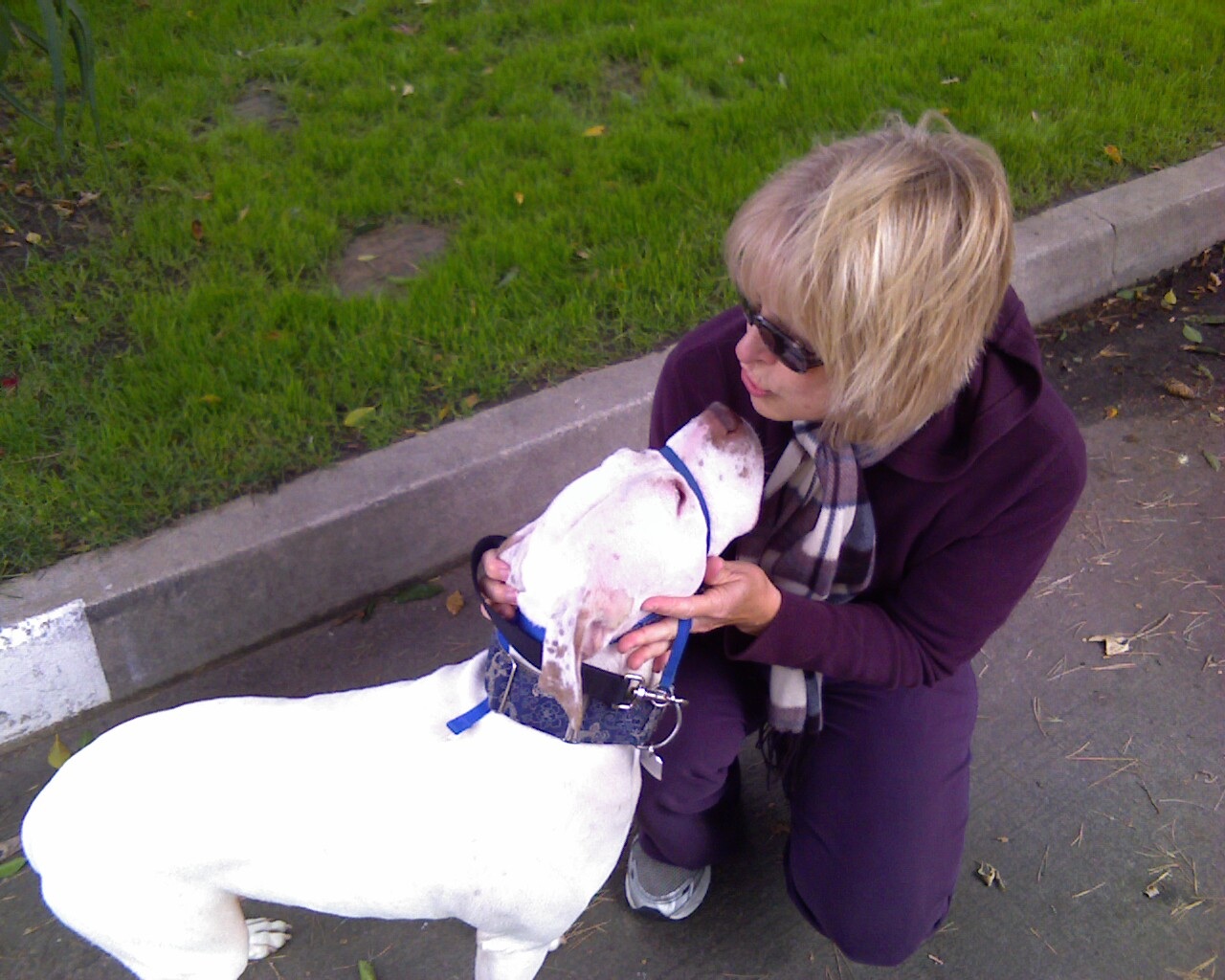
The beautiful Pit Bull pictured above is one such creature. Her name is Junebug and she was adopted from a shelter by my friend, Dena, several years ago. Junebug has become the most devoted guardian to Dena's new baby, Rowan. At about five weeks into Dena's pregnancy, Junebug began to customarily sleep with her head on Dena's tummy. At five months in, when the baby began to kick, Junebug would run in from the other room and lay next to Dena while it was happening. As Dena would say "She didn't want to miss it!" Dena was away from home when she first went into labor. According to the dog sitter, Junebug had been staring at sitter intensely all day and she wasn't sure why.
The moment baby Rowan was brought home from the hospital, Junebug's mothering instincts completely took over. According to Dena, "She has been his best friend. If she hears him make a noise, she comes from across the house to check on him. She doesn't bother him. Just looks at him and licks his feet. She sits by the changing table while I change his diaper and watches him in his swing. We had to teach her that watching too close stops the swing and show her where to sit. " Dena also says that Junebug will come find her whenever Rowan wakes up. She runs in the room and runs out again until Dena follows her lead. One day when Rowan woke for a feeding, Junebug sensed he was hungry so she went to her food bowl, grabbed some kibble in her mouth, and then layed it at Rowan's feet. She knew by instinct what he needed in that moment even before his human Mommy had time to check. Rowan doesn't know it yet, but he has a friend for life. We should all be so lucky to have a Pit like Junebug in ours.
Tuesday, May 24, 2011
Curing Separation Anxiety
Dogs love to be around us all the time. They never need a break. Sometimes though, this want to be with us can turn into an unhealthy state of mind known as separation anxiety. If your dog barks incessantly, rips the molding off the door, or destroys your couch cushions whenever you leave the house, you know this condition all too well. Separation anxiety can be cured but it does take a lot of patience and repetition. Below are some things that you can do to help your pup out of this state of mind:
1) Don't make a big deal out of coming and going from your home. For the last 15 minutes before you walk out the door, don't make eye contact or scratch him on the head. Just walk out the door. When you return, it's the same drill. Wait at least 15 minutes to engage your pup in any way. This is a really hard exercise to follow, especially at the end of the day. Your dog is so happy to see you and you feel like you're letting him down. Just keep his greater well-being in mind and soldier on. After 15 minutes, give him all the love and affection that you want. This is the single greatest exercise you can do to relieve his anxiety.
2) Pretend to leave and then don't. Lace up your shoes, put on your coat and grab your keys. Then, go make yourself a snack or sit down to read a book. Your dog relies mostly on non-verbal communication. He gets to see your routine everyday and he knows that when you reach for your wallet, you are headed out the door. His anxiety begins there. A simple practice is to keep your keys on a table near the door and then grab them periodically and jingle them without leaving. Don't make eye contact with your dog during this exercise. You are just systematically desensitizing him to those non-verbal cues.
3) Leave for short periods of time. On the weekend, go get the mail and come right back. Run to the store and come right back. We like to multi-task and do a lot of things at once. Instead, for the next couple weeks, do each small task outside of your home individually. That way, your pooch will realize that when you walk out the door, it won't be an eternity before you return.
4)Reward your dog when you leave. Give your pup a treat when you leave for work in the morning. My favorite is filling a Kong toy with smooth peanut butter, putting it in the freezer overnight, and then giving it to your dog as you walk out the door in the morning. It's like a peanut butter popsicle and it takes him a long time to eat. Your pup will begin to look forward to your leaving because he gets a treat. And, he'll be distracted during that very crucial time period right after you leave. Most separation anxiety cases get to work on destroying things within a few minutes of their owner's departure.
5)Don't punish your dog for his anxiety. You come home and your brand new couch has been destroyed. It's hard not to be upset. Yelling and punishing your dog only makes the anxiety worse though. Chances are that your pup did his redecorating hours ago and he won't have the faintest idea of why you are mad. All he sees is that you entered the home and got really angry. Now, he's even more anxious about your comings and goings.
6)Exercise! The old adage that a tired dog is a happy dog is absolutely true. Aim for at least an hour of exercise a day. You can break up the time in any way you choose. Turn that stroll into a brisk walk or play fetch. Your pup will thank you.
7)Engage your dog's mind. I know I bring this up a lot. It's because this is one of the most overlooked ingredients to a happy dog. Teach your dog new commands. Invent them if you want. Hide treats around the house for your pup to find. Play hide and seek with him. Anything that requires your pup to use his brain goes a long way in making him a more relaxed pup.
If you follow all of these steps, you should see a significant improvement in your pup's behavior. Before starting any of these tips, you should take your dog to the vet to rule out any ailments that may be causing anxiety. As a last resort, your vet can also prescribe anti-anxiety medication. I'm personally not a big fan of medicating dogs for behavioral issues unless it is absolutely necessary. Every drug comes with side-effects that can impact both your dog's physical health and personality. If you do decide to choose this option, please research the drug on your own before administering.
1) Don't make a big deal out of coming and going from your home. For the last 15 minutes before you walk out the door, don't make eye contact or scratch him on the head. Just walk out the door. When you return, it's the same drill. Wait at least 15 minutes to engage your pup in any way. This is a really hard exercise to follow, especially at the end of the day. Your dog is so happy to see you and you feel like you're letting him down. Just keep his greater well-being in mind and soldier on. After 15 minutes, give him all the love and affection that you want. This is the single greatest exercise you can do to relieve his anxiety.
2) Pretend to leave and then don't. Lace up your shoes, put on your coat and grab your keys. Then, go make yourself a snack or sit down to read a book. Your dog relies mostly on non-verbal communication. He gets to see your routine everyday and he knows that when you reach for your wallet, you are headed out the door. His anxiety begins there. A simple practice is to keep your keys on a table near the door and then grab them periodically and jingle them without leaving. Don't make eye contact with your dog during this exercise. You are just systematically desensitizing him to those non-verbal cues.
3) Leave for short periods of time. On the weekend, go get the mail and come right back. Run to the store and come right back. We like to multi-task and do a lot of things at once. Instead, for the next couple weeks, do each small task outside of your home individually. That way, your pooch will realize that when you walk out the door, it won't be an eternity before you return.
4)Reward your dog when you leave. Give your pup a treat when you leave for work in the morning. My favorite is filling a Kong toy with smooth peanut butter, putting it in the freezer overnight, and then giving it to your dog as you walk out the door in the morning. It's like a peanut butter popsicle and it takes him a long time to eat. Your pup will begin to look forward to your leaving because he gets a treat. And, he'll be distracted during that very crucial time period right after you leave. Most separation anxiety cases get to work on destroying things within a few minutes of their owner's departure.
5)Don't punish your dog for his anxiety. You come home and your brand new couch has been destroyed. It's hard not to be upset. Yelling and punishing your dog only makes the anxiety worse though. Chances are that your pup did his redecorating hours ago and he won't have the faintest idea of why you are mad. All he sees is that you entered the home and got really angry. Now, he's even more anxious about your comings and goings.
6)Exercise! The old adage that a tired dog is a happy dog is absolutely true. Aim for at least an hour of exercise a day. You can break up the time in any way you choose. Turn that stroll into a brisk walk or play fetch. Your pup will thank you.
7)Engage your dog's mind. I know I bring this up a lot. It's because this is one of the most overlooked ingredients to a happy dog. Teach your dog new commands. Invent them if you want. Hide treats around the house for your pup to find. Play hide and seek with him. Anything that requires your pup to use his brain goes a long way in making him a more relaxed pup.
If you follow all of these steps, you should see a significant improvement in your pup's behavior. Before starting any of these tips, you should take your dog to the vet to rule out any ailments that may be causing anxiety. As a last resort, your vet can also prescribe anti-anxiety medication. I'm personally not a big fan of medicating dogs for behavioral issues unless it is absolutely necessary. Every drug comes with side-effects that can impact both your dog's physical health and personality. If you do decide to choose this option, please research the drug on your own before administering.
Monday, March 21, 2011
The Interactive Dog Walk
 | |
| Vince and Mom |
1. Use curbs and low walls (no higher than about 2 feet) as balance beams. Invite your dog onto the wall by using the command "up"and giving a short tug upward onto the leash. Guide them along the wall and then give the command "down" for them to jump down. Reward with lots of love or a treat. If they don't make it all the way to the end, go back to the beginning and start over. If you have a small or miniature pup, please stick to the curb. Little guys are fragile and it can be dangerous if they lose footing.
2. Use trees to train your dog to walk next to you. Find several trees lined up in a row and weave in and out of them at a moderate pace. Go just fast enough to keep Fido from being distracted by scents on the ground. When you get to the last tree, turn quickly and weave back through. Changing directions quickly and often teaches your dog to follow you. As your dog learns, you can challenge him more by picking up the pace.
3. Use a fallen tree branch or very low hanging limb (only about a foot off the ground) to teach your dog to jump. Start about 15 feet away and walk quickly towards the branch. When the limb is directly in front of you say "jump" and tug upwards on the leash. Once on the other side, turn around immediately and do it again. Repeat 5 or 6 times giving lots of affection or a treat after each completion. And I would advise walking around the limb yourself. You'll be concentrating on your dog and therefore not on your own feet. :)
4. Use "sit", "stay", and "come" to increase your dog's focus. Have your dog sit, tell him to stay, give him the full length of the leash, wait a beat and then tell him to come. Reward with treats or affection. I would also recommend investing in a 20ft leash. It's perfect for this exercise. Start by giving your pup four feet of slack and build up to twenty. You can use a sharpie to mark the leash off in 4 foot segments ahead of time if you want. And you can make your dog "stay" for longer and longer lengths of time before you ask him to "come". This exercise is great for teaching your dog to focus on you despite a myriad of distractions such as exciting scents, squirrels, garbage trucks, etc.
5. Train your dog to pee on command. It can be done. When you first exit your home, keep your dog on the sidewalk next to you, then pick a patch of grass, say "go pee", and release the slack in the leash. After your dog pees, give him lots of affection. Walk him next to you on the sidewalk again and then when you get to that tree that he always loves to mark, say "go pee", let him pee, and then immediately reward. Just do this trick a couple of times each walk. You want your pup to be able to do this exercise but still have the freedom to go on his own. And it's best to do this at the beginning of the walk when you know he has to go.
6. Don't stop here. Invent your own tricks! If you can think of it, teach it. Just double-check that it's safe first.
Wednesday, February 23, 2011
Bringing Home Puppy
 |
| Vida Las Vegas (pic by Steven Hoffmann) |
1) Scent goes a long way. Before puppy ever crosses your threshold, it's best if you start off the process by getting her used to the smells of her new companions. If you can, go ahead and give the breeder a t-shirt, towel, or other article of clothing that contains both your scent and your adult dog's scent to put in puppy's bed.
Likewise, see if you can get something from the breeder that has the puppy's scent on it and give it to your adult dog. When your adult dog is calm and relaxed just place the article in front of him and let him investigate. Later on, put it in his bed so he'll get used to the pup's smell in what is basically his "den". Dogs are very territorial about their dens so your adult dog needs to understand that puppy is part of the family not an intruder.
If you can't get an article from the breeder ahead of time, then definitely grab one when you pick up your puppy to bring her home. When she goes to bed the first night, it helps her to have the scent of her mother and littermates around her. Ideally, it would ease the separation anxiety for the puppy if she could cuddle up with your adult dog on the first night. Just see how the introduction goes and judge it from there. If the dogs don't seem to get along like old pals on the first day, don't force it at bedtime. Regardless of whether puppy ends up sleeping with the adult dog or not, you will want the puppy to sleep in your bedroom. You are the new "mama" and she needs to be close to you.
2) When you first introduce adult to puppy, do it on neutral ground. Introduce them in the park or even on the grass across the street and keep them both on a loose leash. Have the adult sit and then present the puppy's butt for him to sniff. Then just put the puppy on the ground a few feet away and let the magic happen. I wouldn't let any neighbors or random bystanders intrude on this moment. It's very important that both dogs are relaxed and that you be relaxed as well. Don't talk a lot. Don't anticipate disaster. Just tell yourself that it's the most natural moment in the world. If you notice any growling, avoidance or wariness on the adult dog's part then just separate them, correct the behavior and start walking them together down the street a little ways with each dog on either side of you. No matter what happens, avoiding yelling at all costs. Yelling only escalates the situation. I would also take the adult dog on a long walk before leaving to get the puppy so that he'll be more relaxed. And when you give the puppy affection make sure the adult gets equal attention. This is really important for the first few weeks to avoid jealousy.
3) Let puppy get used to her new surroundings. Let her sniff around your front yard before entering your home for the first time. Put your adult dog in the backyard at this point or have someone take him for a walk. Then, open the front door and let the puppy follow you in. You can encourage her with treats if necessary. Let her explore for a few minutes while still on a loose leash. Just follow her around and let her go where she wants. Then bring your adult dog in on leash. Walk both dogs from room to room. Then take them to your family area and let them off.
4) Remove any food bowls or toys from the floor as to not inspire territoriality.
5) Keep an eye on both dogs during any new situation. These include going into the backyard for the first time, guests coming over, feeding time, etc. It's situations like these that inspire dogs to get possessive.
6) Don't feed the dogs in close proximity. Place the bowls at least 6 feet apart and then remove them from the floor when the dogs finish eating.
Above all else, relax and enjoy this moment. It really is a magical thing to witness.
Monday, January 31, 2011
Tail Language

Dogs convey their feelings in all sorts of ways. They speak to us through vocalizations like barking, growling, and yelping. They speak to us by bristling fur, exposing teeth, and the posture of their body, head, ears, and tail. Most of us are good at interpreting these signals but sometimes the wires can get a little crossed. Maybe your dog is growling but his front end is dropped to the ground. Is he going to attack or does he want to play? This is why it's good to study each of the ways that your dog communicates in order to get a complete picture. After all, you don't want to punish your dog for playing and you don't want him to start a fight either. In this post, I'd like to discuss tail position. The following is a general description of the various tail positions and if your dog could speak, what he might be saying. Keep in mind that if your dog's tail is naturally curled over the back (think Siberian Husky) or naturally tucked between the legs (Greyhound) that some of these don't apply.
Wagging from side to side, parallel to the ground - "Oh boy, oh boy, oh boy, oh boy!! This is SO awesome!! I'm so happy to see you! I love you! Did I tell you that? I love you. I love you. I love you." And the wider your pup is wagging his tail the more excited he is.
Tail tucked between legs - "I'm scared."
Tail slightly raised but not yet parallel to the ground, may be wagging - "You're in charge. I'm gonna relax and enjoy myself."
Tail parallel to the ground - "Hmmm, what's this?"
Tail parallel to the ground and stiff - "Hmmm, what's this? I'm not sure if I'm going to like it."
Tail pointing up - "This is my territory. I just want to make sure you know that."
Tail pointing up and stiff with the tip curved forward - "I'm king of the world!!! You may all bow to me now."
Above all else, get to know your dog's personal signals. Tail position alone won't tell you everything but it might give you a clue.
Subscribe to:
Posts (Atom)